

Multimedia Accessibility
Diverse, accessible multimedia content is the need of the hour.
Home » Our Services » Content Compliance » Multimedia Accessibility
Many creators and publishers overlook the aspect of accessibility when creating audio and video content. This often affects their engagement and overlooks a particular disenfranchised demographic.
Lack of multimedia accessibility affects millions of people around the world.

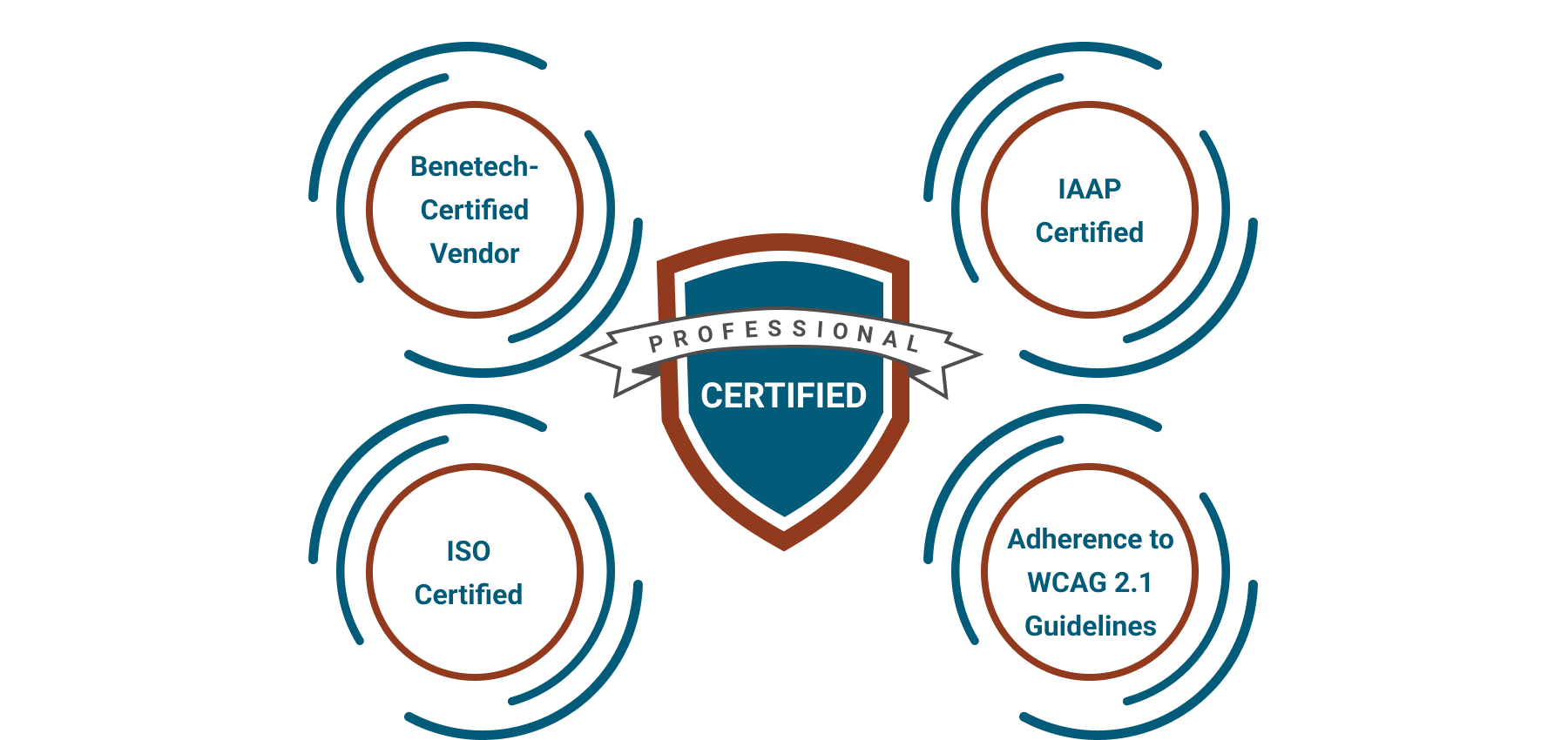
Amnet Certification
Information is rapidly being disseminated in a variety of formats and across media. The general population today consumes interactive content, animations, video, and audio at a staggering rate and volume. Access to multimedia has become increasingly essential in digital strategy. You can use it to ensure your content is user-friendly to people with disabilities.
Amnet’s multimedia accessibility services assist in structuring and producing multimedia accessibility through synchronized captions, text transcripts, and audio descriptions. We assist you in identifying and removing obstacles that users with disabilities face when trying to access multimedia material.
Transcripts and captioning
Videos account for the majority of all internet traffic worldwide. Your audio and video content must contain text alternatives to be usable by users with hearing impairments. Depending on your accessibility needs, Amnet offers closed-captioning and transcripts for all audio and video content.
Audio descriptions
When narrating audio content, context is crucial. Amnet enables you to create in-depth audio descriptions that detail visual information in a way that provides vital context, which may not be obvious, especially for individuals with visual impairments. Our audio descriptions assist in establishing a scene and expressing key emotions, enabling people to fully engage with the content.
Sign languages
Audiovisual content must frequently be interpreted using sign languages for hearing-impaired audiences. Amnet enables you to easily reach the hard-of-hearing group in your audiences, who depend on sign language to comprehend any form of communication, by integrating American Sign Language (ASL) into your video content. We follow the best practices for integrating sign languages into your content and ensure complete compliance with the relevant guidelines.
Amnet’s accessibility services are strengthened by our established publishing services skills, unwavering commitment to inclusivity, a variety of automated tools, and effective workflows. We offer multimedia content that has been modified to be accessible across various platforms and demographics. Amnet incorporates pertinent accessibility tools into content for people with disabilities.
Frequently Asked Questions
What is multimedia accessibility?
Multimedia accessibility makes audio and video content usable for everyone, including individuals with disabilities, by providing captions, transcripts, audio descriptions, and other accessibility features to ensure inclusivity and standards compliance.
Why are captions and transcripts important for videos?
Captions and transcripts help ensure that video content is accessible to users with hearing impairments while also improving understanding, usability in silent or noisy settings, and searchability of the content.
What is closed captioning versus open captioning?
Closed captions are user-selectable captions that can be enabled or disabled during playback, whereas open captions are embedded directly into the video and remain visible at all times. Both formats help make multimedia content more accessible and user-friendly
Do you provide sign language integration for videos?
Yes, sign language integration can be incorporated into video content to support users who depend on sign language for effective understanding. This service strengthens inclusivity and enables broader audience reach across multimedia communications.
What are audio descriptions in multimedia content?
Audio descriptions add verbal explanations of key visual information within multimedia content, ensuring that users with visual impairments can access context, actions, and on-screen details that are not conveyed through dialogue alone.
How do you make video content accessible to all users?
Video content is made accessible through the implementation of captions, transcripts, audio descriptions, sign language integration where required, and properly structured media controls. These accessibility features ensure that multimedia content is inclusive, standards-compliant, and usable for diverse audiences across different platforms and devices.